
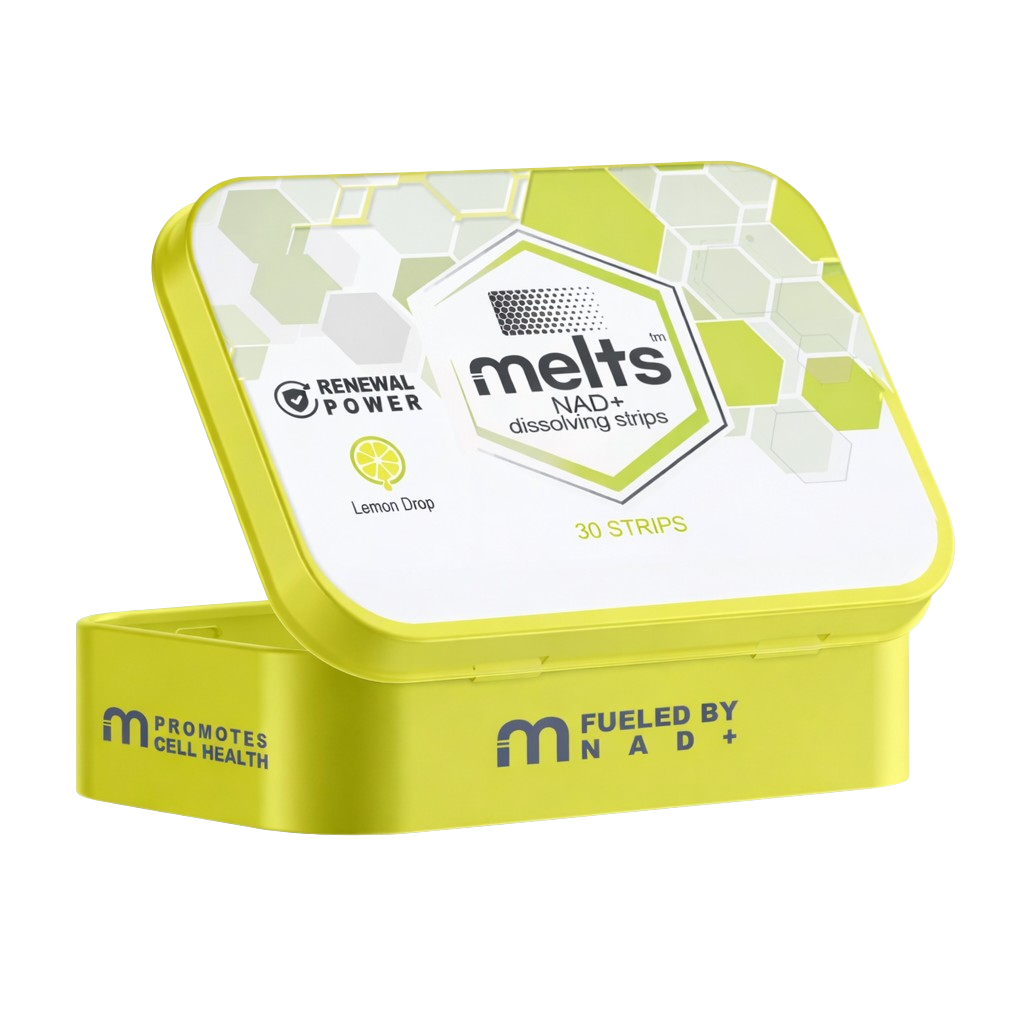
Description
Melts™ NAD+ Dissolving Strips: product identity and catalog context
30 Strips is temporarily out of stock. Try another strength above — or get an email the moment it's back:
Melts™ NAD+ Dissolving Strips appears in the Dissolving Strips collection at American Peptides. This guide separates the product-specific reference description from general purchasing and recordkeeping considerations. Technical statements summarized here originate in the public reference listing, not in a newly issued batch certificate. Current availability, selected options and supporting documents should be checked independently.
Matrix-based formats and analytical extraction
A dissolving-strip listing describes a material incorporated into a matrix. The matrix is part of the supplied format and can matter when interpreting an analytical result. Compound identity, stated material content and the presence of other ingredients should be recorded separately. A strip format does not establish suitability for human administration, and the catalog should not be read as a therapeutic recommendation. Laboratory comparison with a powder or liquid format requires attention to extraction, matrix effects and the limitations of the analytical method. If carrier composition is not fully disclosed, researchers should not invent it. The relevant question is whether the documentation supports the intended research evaluation, rather than whether the package resembles a consumer product.
Product-specific selection considerations
For Melts™ NAD+ Dissolving Strips, the starting point is the exact reference identity rather than the category label. Record the documented physical format and any explicitly stated composition before comparing it with another listing. A public product page may combine product-specific paragraphs with sitewide promotional text, and those two sources of information should not be treated as equally specific. Statements about testing, delivery, discounts or customer numbers require separate confirmation for the store and the supplied batch. This guide deliberately avoids converting reference marketing into a claim about a current shipment. It also avoids inventing numerical specifications when the available record is ambiguous or internally inconsistent.
Reading the product record
A useful product record keeps several kinds of information separate. The product name identifies the catalog entry, while the detailed description explains what the material or item is. Packaging, selected option and price are separate from scientific identity. Information carried by a public reference page is not automatically a specification for a newly supplied batch. Before relying on a technical detail, compare it with the current label and the relevant documentation. If two parts of a reference page disagree, do not silently choose the more attractive number. Preserve the uncertainty and request clarification. This approach helps prevent an old listing, a generic template or a reused marketing statement from becoming an unsupported claim about a specific product.
Documentation and the limits of catalog claims
A certificate of analysis is meaningful only when it can be matched to the supplied material. A general statement that a supplier tests products does not establish the result for every batch. For chemical research materials, identity and purity are different analytical questions. A purity percentage depends on the method used and should not be interpreted as a complete measurement of every possible impurity. Likewise, a mass-related observation does not by itself establish every structural feature. Where a current analytical document is unavailable, the absence should remain explicit. Product descriptions should not manufacture a certificate number, testing laboratory, sterility result or accreditation. The same principle applies to nonchemical goods: describe the item that is documented rather than carrying over unrelated testing claims.
Receiving, inventory and version control
An organized receiving process records the product name, selected option, supplier, receipt date and any identifiers that accompany the item. For research materials, the batch identifier should remain connected to the actual container and any supporting documents. Photographing a label or saving a dated product record can help explain later differences between catalog versions. A laboratory inventory should distinguish unopened material from material already used in an experiment, without relying on the retail product name alone. If a description is revised, keep a record of what changed and why. This is especially valuable when collaborators compare results obtained at different times. Traceability is a recordkeeping practice, not a claim that every product has identical characteristics.
Comparison without overstating equivalence
Related catalog entries are useful for finding materials or items that address a similar purchasing question, but a related link is not a declaration of equivalence. Different chemical identities may share a category while requiring different analytical methods. Different physical formats may carry the same compound name without sharing a complete formulation. Separate bundle containers should not be confused with a mixture in one container. For merchandise, a related item may share branding while differing in fit or construction. Comparisons should state what is actually being compared: identity, format, documented composition, option or appearance. Avoid extending a result or specification from one entry to another without evidence. Careful comparison produces a clearer catalog and more interpretable research records.
Questions to resolve before selection
Begin with a specific question rather than a broad category promise. What exact product or material is required? Which details are explicitly documented, and which remain uncertain? Does the selected format match the laboratory or purchasing context? Are the relevant supporting records available for the item that will actually be supplied? Is the current option, price and availability confirmed? For research compounds, institutional oversight and an appropriate experimental plan remain essential. For apparel, confirm sizing and variant information rather than assuming a photograph defines every option. These checks are practical ways to use a catalog responsibly. They also make it easier to identify when a product page needs clarification rather than additional promotional language.
Responsible interpretation of research information
Descriptions of experimental targets, structures or pathways summarize a research context. They are not medical advice and do not establish that a material is safe or effective for human or veterinary use. A laboratory observation depends on the model and methods used, and its limitations should not disappear when it is summarized on a product page. This catalog does not provide personal administration schedules, therapeutic recommendations or instructions for self-experimentation. Readers should use relevant primary literature and institutional procedures when assessing a research material. When the item is ordinary merchandise, the research-only framing belongs to the wider catalog and should not be mistaken for a chemical specification. Clear boundaries keep commercial descriptions distinct from scientific evidence and personal health decisions.
Related catalog entries
For additional catalog context, review EPITHALON and PINEALON. These links support navigation and comparison; they do not imply interchangeable materials or a combined research protocol.
Reviews
There are no reviews yet.